The Evolution of Safety Systems in Modern Racing Cars

Motorsport has always been a delicate balance between speed and danger. From its early days with minimal protection to today’s high-tech racing machines, the evolution of safety systems has been a constant battle against inherent risks. This article explores the fascinating journey of safety innovations in racing, showing how the sport has transformed from an extremely dangerous pursuit to one where drivers can push the limits with relative confidence—a stark contrast to the alarming near 1-in-20 chance of drivers losing their lives over five seasons in the 1960s and 70s.

The Early Years: Risk as an Inherent Factor

In the infancy of motorsport, safety was largely an afterthought. Drivers competed in cars with minimal protective measures, and fatalities were tragically common. Simple leather helmets and overalls were the primary safety equipment, and cars lacked virtually any form of crash protection. Drivers were acutely aware of the risks, a grim reality that fueled a gradual, yet necessary, improvement in safety standards.

Early Track Safety

Even track design reflected the nascent understanding of safety. The Indianapolis Motor Speedway, from its inception in 1909, quickly recognized the need for improvements. The original crushed gravel and tar surface was replaced with paving bricks, a significant upgrade for the time, as detailed by IMS.

Breakthroughs in Fire Protection

A crucial turning point came with the increased focus on fire-retardant clothing. While basic helmets were already in use, the widespread adoption of fire-resistant materials, like NOMEX, marked a major step forward. Nikki Lauda’s near-fatal crash dramatically highlighted the need for better protection, as reported by Sports Then and Now. These suits, capable of withstanding temperatures of 600 to 800 degrees Celsius, gave drivers valuable time to escape burning wrecks, a point emphasized by Motorsport Week.

Fuel Cell Technology

The late 1970s and 1980s saw the integration of fuel cell technology, pioneered in cars like the Ford GT, minimizing fire hazards by containing fuel more securely in crashes, further improving driver safety, as discussed by Sports Then and Now.

The Technical Revolution: Data and Innovation

Recent decades have witnessed technological advancements revolutionize safety in racing. The introduction of the carbon fiber monocoque, an exceptionally strong and lightweight survival cell, has dramatically increased drivers’ chances of surviving major crashes. This innovation, along with improved seatbelts (now multi-point harnesses), has been fundamental in protecting drivers.

The Monocoque: A Driver’s Survival Cell

The monocoque is the core safety element of a modern racing car, especially in Formula 1. This single-piece chassis, constructed from layers of carbon fiber composite, creates a rigid and impact-resistant structure around the driver. The carbon fiber is strategically layered and cured under high pressure and temperature, creating a shell that withstands enormous forces while remaining lightweight. This ‘survival cell’ protects the driver from intrusion and deformation during a crash, a concept highlighted by Motorsport Week.

HANS Device: Preventing Basilar Skull Fractures

The Head And Neck Support (HANS) device, introduced in the late 1990s and widely mandated after Ayrton Senna’s tragic death in 1994, addresses a specific and deadly injury: the basilar skull fracture. This device connects the driver’s helmet to a collar worn on the shoulders. In a crash, the collar limits the forward movement of the head, preventing the extreme whiplash that causes severe neck and spinal injuries, including the often-fatal basilar skull fracture, a point emphasized by Sports Then and Now.

The Halo: Head Protection

The Halo system, a titanium structure above the driver’s cockpit, is one of the most visually striking safety innovations. Despite initial criticism regarding its aesthetics, the Halo has proven its effectiveness in numerous incidents, deflecting debris and protecting drivers in collisions. Made from Grade 5 titanium, it can withstand forces equivalent to the weight of a double-decker bus, as detailed by Racecar Engineering. Its mandatory introduction in Formula 1 and other formula series underscores its life-saving potential.

Biometric Monitoring: Real-time Health Data

Modern racing safety extends to monitoring the driver’s physical condition. Biometric sensors, integrated into the driver’s underwear or gloves, track vital signs like heart rate and oxygen saturation. The FIA’s Vital Signs Monitors (VISM), introduced in 2020, allow continuous monitoring, enabling race officials to stop the race if a driver’s health is at risk, a development covered by Motorsport Week.

Data Acquisition: The Foundation for Improvement

Data acquisition systems, including ‘black boxes’ and driver-worn sensors, provide invaluable information about accidents. This data is used to improve car and track design continuously. Accident Data Recorders (ADRs) and Ear Plug Accelerometers (EPAs) are now used, for example, in IndyCar, as highlighted by Racecar Engineering, to gather precise data on crash forces and driver responses.

SAFER Barriers and Track Design

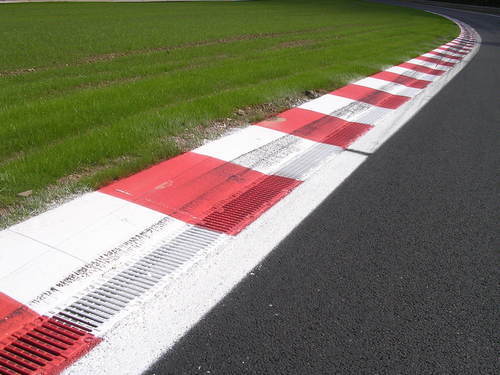
Track design has also undergone significant changes. Concrete walls have increasingly been replaced by energy-absorbing SAFER (Steel and Foam Energy Reduction) barriers. These barriers, pioneered at the Indianapolis Motor Speedway, reduce impact forces in collisions, as reported by NASCAR and IMS.

From Racetrack to Road: Technology Transfer

The development of safety systems in racing cars has significantly impacted the safety of road cars. Many technologies and principles developed in racing, such as crumple zones, improved seatbelt systems, and advanced materials, have found their way into passenger vehicles. While direct applications may differ, the fundamental pursuit of increased safety is shared.

Specific Examples of Technology Transfer

Several key racing technologies have directly influenced road car safety. Anti-lock Braking Systems (ABS), initially developed for aircraft and refined in racing, are now standard on most road cars. Traction control, another racing-derived technology, helps prevent wheel spin and maintain control, enhancing safety, especially in adverse conditions. Carbon fiber, used extensively in racing car construction for its strength and lightness, is increasingly found in high-performance and even mainstream road cars, improving crashworthiness.

Passive Safety Parallels

Concepts like deformation zones in racing car chassis are directly inspired by crumple zones in road cars. The principle of controlled energy absorption during a crash is crucial in both contexts, reducing forces transmitted to the occupants, as highlighted by RoadSafetyFacts.eu.

The Role of FIA: Regulations and Standards

The Fédération Internationale de l’Automobile (FIA) plays a crucial role in driving safety development in motorsport. Through strict regulations, standards, and research promotion, the FIA ensures continuous safety improvements. The FIA’s work extends from Formula 1 to grassroots levels, aiming to make motorsport safer for all, regardless of budget or competition level (FIA). A ‘cascade effect’ ensures that safety technologies developed for top championships are implemented more broadly.

FIA’s 2026 Regulations

The FIA’s 2026 Formula 1 regulations, for instance, include enhanced safety features like stronger structures, tougher tests, and a two-stage nose design to reduce debris in initial collisions. Stricter side intrusion rules and improved protection around the fuel cell are also key components, as detailed by the FIA.

The Future of Safety: Ongoing Evolution

The development of safety systems in racing cars is a continuous process. New materials, advanced computer simulations, and a deeper understanding of crash dynamics constantly open up new avenues for improvement. While risks can never be entirely eliminated, the goal is to make racing as safe as possible without compromising the sport’s excitement.

Simulation and Virtual Testing

Modern racing safety heavily relies on simulation and virtual testing. Sophisticated computer models allow engineers to simulate crashes and test safety systems virtually, optimizing designs and identifying potential weaknesses before physical prototypes are even built. This iterative process accelerates development and enhances the effectiveness of safety measures.

Advanced Braking and Road Safety Principles

Advancements in braking systems, mirroring developments in road car technology like advanced emergency braking, are constantly being explored in racing, as highlighted by the BMDV. The principles of efficient and reliable braking are paramount in both racing and road safety.

Looking Ahead

Future technologies may include even more sophisticated cockpit protection systems, ‘smart’ safety systems that adapt to different crash scenarios, and enhanced use of biometric data to monitor driver condition, along with a greater emphasis on integrating road safety technology and principles, such as those promoted by the IEEE.

A Culture of Safety

Safety in motorsport is not just about technology; it’s also about a culture of safety awareness. Following tragic accidents, like Dale Earnhardt’s death in 2001, a significant shift in mentality occurred within the racing world, as reported by NASCAR. Safety is now integral to every decision, from car design to race management. This cultural change, combined with technological advancements, has made modern racing safer than ever. This includes enhanced driver training, improved track design with a focus on run-off areas and impact-absorbing barriers, and refined race control procedures for rapid incident response.

Motorsport’s Unceasing Safety Pursuit: A Summary

The journey from the early, dangerous days to today’s high-tech racing cars is a story of continuous innovation and a relentless focus on driver protection. Key milestones include the introduction of fire-resistant clothing, the carbon fiber monocoque, the HANS device, the Halo system, SAFER barriers, and advanced data acquisition systems. While risks can never be fully eliminated, the progress in safety systems has been enormous. Every step, from basic leather helmets to today’s Halo, from concrete walls to SAFER barriers, and from simple belts to multi-point harnesses, has saved lives and reduced injuries. Motorsport’s commitment to safety is unwavering, a constant reminder that the pursuit of speed must never outweigh the value of drivers’ lives.


Smokers’ Etiquette When Attending a Car Racing Event

Just because you’re a smoker doesn’t mean you can’t enjoy fun out there with the crowd. What is important is to be considerate of others and mindful of the environment. Here are some etiquette tips when attending a car racing event as a smoker.

Use Designated Smoking Areas

Most racing events have designated smoking areas to accommodate smokers like you and me. Use these spots and avoid smoking in non-designated areas. Some auto races may even have additional restrictions, such as designated smoking times.

Go Smokeless

This is where cigarette alternatives such as snus UK come in. Considered smokeless and spitless, snus is ideal for use in places where smoking is restricted. It comes in small, discreet portions or pouches that you can easily carry around and use without needing additional accessories like lighters or ashtrays. Simply place a portion between to your lips and gum and you’re good to go.

Dispose of Butts Properly

It is proper to use ashtrays or disposal bins for cigarette butts to avoid littering the area. Racing venues often have strict policies when it comes to cleanliness.

Respect Non-Smokers

Smoking isn’t a thing for everyone. In fact, that’s the reason it’s restricted in public or social places. With many people being sensitive to cigarette smoke, it pays to keep a reasonable distance from non-smokers when lighting up. Check the wind direction too.

Know the Local Laws

Racing venues often adhere strictly to local laws and regulations regarding smoking in public places. You will need to familiarise yourself with these laws to ensure you’re on the safe side.

Here Are the Fastest Cars in 2022

The automotive industry is growing exponentially, with companies introducing speed monsters each year. In this roundup, we have sampled the fastest cars in 2022. Find out which one can get to the finish line first.

1. Koenigsegg Jesko Absolut

Even though the speed is still theoretical, the Koenigsegg Jesko Absolut is the fastest racing car today. Under the bonnet, the Swedish giant has packed it with a 5L twin-turbo V8 engine complemented by a 9-speed multi-clutch Light Speed Transmission (LST) system. According to the company’s target, the Jesko Absolut should have a top speed of 310mph. Still, the latest reports indicate it could push the limits further to 330mph.

2. Hennessey Venom F5

At number two is the Hennessey Venom F5, powered by a 6.6-litre twin-turbo V8 engine and a 7-speed single-clutch automated CIMA manual transmission. Its top speed is still theoretical, but the manufacturer claims it will exceed 311mph. Unfortunately, only 24 units are in the pipeline, so you will have to be a moneybag to get one, as the pre-tax price is in the region of £1.58m.

3. Bugatti Chiron Super Sport 300+

In the list of the fastest cars, you can’t miss a Bugatti. In this roundup, the French automobile manufacturer is represented by the Bugatti Chiron Super Sport 300+. It boasts the Chiron’s quad-turbo 8.0L W16 engine and a 7-speed dual-clutch automatic gearbox. Its electronically capped top speed is 273mph, but the company will allow owners to push it further to 300mph.

The above are the three fastest racing cars in 2022. Other worthy mentions include the SSC Tuatara (286mph), Rimac Nevera (259mph), McLaren Speedtail (250mph), and Aston Martin Valkyrie (250mph). But the race is not over. Each car manufacturer is working overtime to beat the other, so expect faster cars as we usher in 2023.

Augmentation And Race Attendees

People will often go to race events in order to see skilled drivers compete against their peers. Attendees of races will want to look their best. In some cases they may even desire to be the most eye-catching person there. If so then they could opt for augmentation. The company Motiva specialises in providing round breast implants to clients. Their service will appeal to a wide range of different people, including racing fans.

The Best Possible Clothing Fit

One of the main ways that a person will try to wow others at a racing event is by wearing a great looking outfit. A lot of women are limited in the clothing that they can wear because of the body shape that they were born with. Augmentation allows these people to take back control and increase their body autonomy. Women may also notice that clothing sizes are erratic within the fashion industry. They might wish to obtain implants in order to gain the best possible fit. These types of procedures make the person’s figure look much more flattering in a plethora of different outfit types.

Watching Races Socially

Sometimes a person will watch races by themselves. It offers them a chance to enjoy a solo hobby. However, it is also common for racing fans to meet up together and spectate within a social environment. A good example of this is the iconic Le Mans which brings in huge crowds. The person may want to plan ahead so that they look fantastic in advance of such events. This preparation could involve obtaining round breast implants from Motiva. When the person hangs out with their friends at the race they will be much more likely to impress others with their improved aesthetic.

Gaining Useful Medical Insight

The company Motiva allows clients to get in touch with knowledgeable medical experts. This will give them the opportunity to ask any questions that may be on their mind. The path to body augmentation is often a collaborative one. The client explains what they want the end results to be. Meanwhile the surgeons come up with the ideal action plan. People may wonder how long it will take before they are recovered enough to attend races. Motiva gives them important medical insight.

A Boost In Overall Confidence

The end results of augmentation are obvious. The client will look much better than they did before. They will be more likely to turn heads at race events. However, there are also psychological benefits to consider. For example, many women feel much more confident in themselves after undergoing these kinds of procedures. It can end up making them feel very comfortable in their own skin. They can enjoy races without feeling self conscious.

Top Tips on How to Maintain Racing Cars

The type of car you plan to race with may affect your performance. However, even with the best car model that is not in the best mechanical condition, it is not easy to win a car race. Therefore, motorsport racers have to maintain their vehicles in the right shape.

In this post, we’ve highlighted some of the critical maintenance tips of a racing car.

Cleaning and Inspecting Shock Absorbers

Since motorsport racing is a speed competition, drivers barely observe potholes and other road conditions that cause the shocks absorbers to wear out quickly. Regular checking the absorbers is essential to ensure they are in the right working condition. After a competition, the absorbers should be removed, cleaned and inspected. Check if the shafts are dented or have dings and bends.

Radiator Cleaning

A radiator is an integral part of a car. If the radiator fails to function well, the engine may heat up, causing it to knock. Therefore, always inspect for leaks, hose clamps as well as the hoses themselves. Besides, clean your radiator regularly. Since most motorsport races are on muddy roads, the radiator may be full of dirt. You can use a pressure cleaner to get rid of the mud.

Bolt Run

Before you get into a race, you have to ensure all bolts are tight. Using a wrench, you can check loose bolts and tighten them. Rugged roads and the high speed of racing can cause most bolts to loosen after a race. Hence tightening them regularly is critical.

Brake Bleeding

When washing your cars, mainly using pressure cleaning machines, moisture could be trapped in your car’s system. Therefore, brake bleeding can help to remove the trapped moisture. Besides, when the brakes heat, the brake fluid starts to break down. Bleed regularly to keep fresh fluid in your system.

Racing Fitness

Racers are exposed to hours of high temperatures, jarring, and movements that are not familiar to most people driving a vehicle at normal speeds. A racer needs a surprisingly high level of fitness to endure long hours of racing.

Why do Racers Need to be so Fit?

Racers fly around a course at speeds up to 200mph. However, the pressures on the body are not the same as driving on the highway. Racers are pushed against different parts of the vehicle and must use a lot of upper body and core strength to steer the vehicle around the course. Racers must deal with extreme temperatures and heavy sweating which results in weight loss. Losing muscle is also a real possibility in high temperatures. This means that racers have an obvious need for maintaining strength, high levels of endurance and flexibility during a race. They must also learn to recover after a race.

What Kind of Exercise is Beneficial to Racers?

Racers need biceps, shoulder, forearm and abs strength for steering. Racers need to maintain and strengthen these muscles. Racers should also be flexible for moving quickly. Racers must also remain lean because high weight adds too much weight to the vehicle. Racers should train with low weights and high repetitions to gain strength and stay lean. Cardio exercise like running, cycling, and swimming increase the heart rate and simulates the high adrenalin race car environment.

Racers often complain of muscle soreness and muscle pain after a race. Some form of exercise for recovery helps with better moving well after a hard race. Racers often swim, do yoga or pilates to help keep muscles stretched out. Stretching is another way to recover after a race.

Racers need to be in top physical shape to take on a course. A good exercise program that combines strength, endurance, and flexibility will make a racer more confident and stronger in the race seat.

Auto Racing: Transport and Logistics

Racing events are held all over the world. The 24 Hours of Le Mans is held in France, the Daytona 500 in Florida, and the Bathurst 1000 in Australia, to name only a few. Because these events may be held at faraway venues, race crews inevitably face serious transport and logistical challenges.

With this in mind, https://www.worksystem.co.uk offers a variety of high-quality transport gear ideally suited for racing crews or anyone else who is looking to haul lots of equipment from one place to another.

Van Racking and Storage Solutions and Accessories

Worksystem’s extensive product line features a range of sturdily-built and reliable van storage solutions, including racking, shelving, fittings and modular systems. Worksystem products allow race crews to optimise available load spaces, regardless of the type or size of their particular cargo vehicle.

Worksystem also offers lots of practical work-van accessories that are perfect for hauling auto-racing (or cycle-racing) equipment. Accessories include smartboxes, dividers, rack boxes and drawer dividers, all of which are designed for maximum usability.

Underfloor Drawers and Roof Equipment

When hauling equipment to faraway racing venues, every centimetre of load space must be taken advantage of. For this reason, Worksystem provides a range of excellent van underfloor drawers (also known as ‘double floors’) that are both easily accessible and ergonomically sound.

Additional racing gear can be stored on the top of one’s van with Worksystem’s line of reliable roof equipment, which can be adapted to fit any cargo vehicle.

Sledges, Rolltops and Covers

With a view to making transport as smooth as possible, Worksystem also offers extendable sledges, which allow users to easily access racing gear stored in the rear of their van. Able to support up to 350 kilograms (in the pull-out position), these can be fitted to any vehicle.

Worksystem’s range of rolltops and covers is sure to keep racing equipment safe, both from bad weather and possible theft.

Best Shoes for Racing Events

In all events world over, the outfits that are worn or the dress codes help blend in with and sometimes match, the activities of the day. This is the reason why drivers, fans, stewards, security crew and other participants must have special footwear for these occasions. Here’s a look at what various participants should wear.

Fans

You cannot remove the adventurous, mingling spirit of fans. In this section, there are little or no rules; however, safety should form part of the consideration. Sneakers, rubber shoes, and comfortable open shoes are just but a few examples. Fans can consider the weather predictions, after-party plans and maybe health conditions in choosing the right pair.

Stewards and Security Crew

This group of people perform a very crucial role in safeguarding the fans, keeping order and ushering. To dispense their roles effectively, obtaining athletic Ecco Shoes such as running shoes, court shoes or even hiking boots, depending on the type of track, can work best for them.

Drivers

These are the people fans pay tickets to watch while racing and must, therefore, be thoroughly secured and comfortable. Shoes with good grip, perfect posture balance, the right weight, and good air circulation must form the A list. The variety includes sturdy leather shoes or fine leather with rubber soles. Depending on the manufacturer and type of race, the driver should make a choice that best suits them.